
The Revolution That Should Have Been—and Still Could Be
Conjecture Institute Fellow Paul Raymond-Robichaud proved that the universe can be local and real after all — vindicating Einstein’s dream and unsettling a century of quantum orthodoxy. So why has almost no one heard of it?
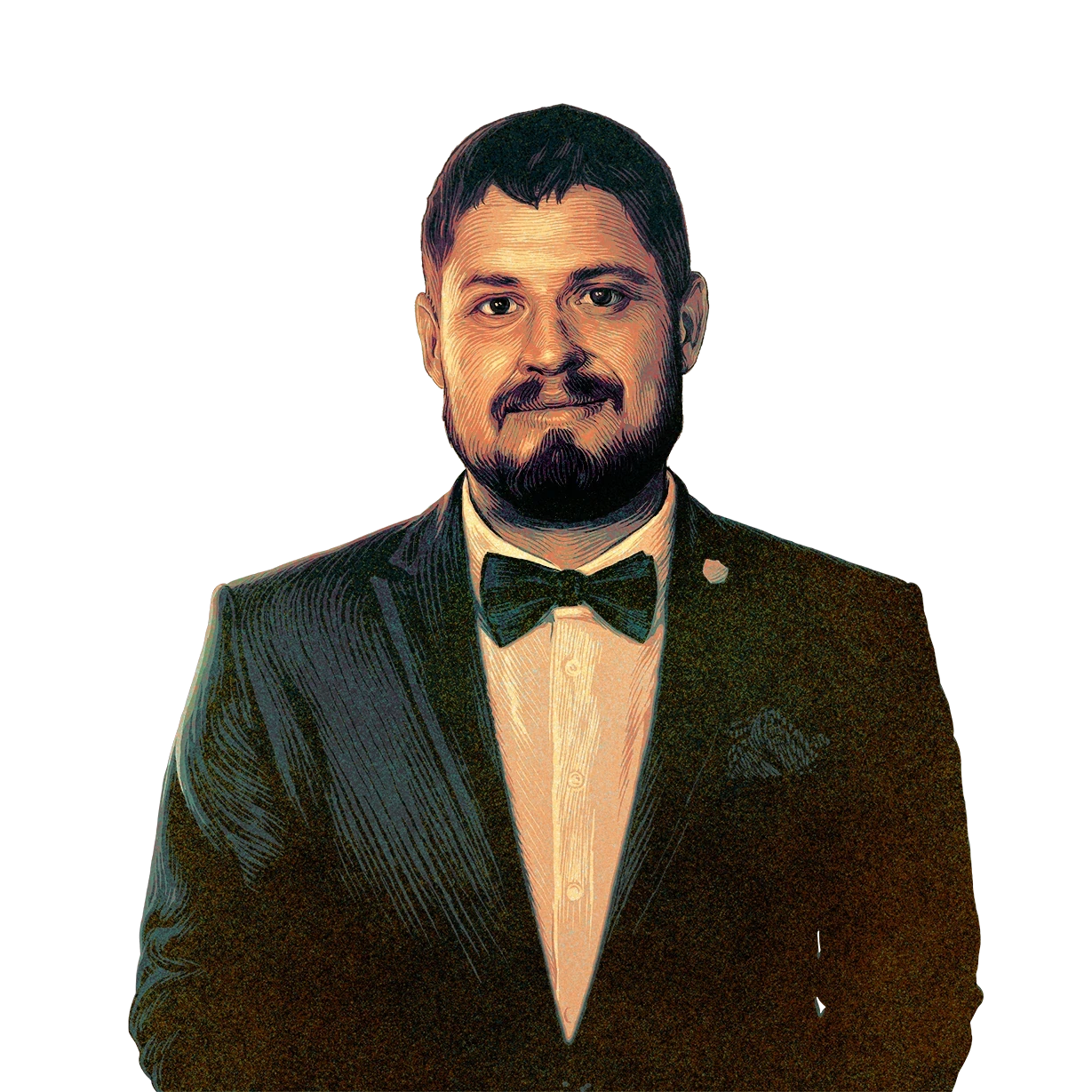
“Paul’s theory is the most significant discovery in quantum foundations so far in the twenty-first century,” says Gilles Brassard FRS, co-inventor of quantum cryptography and quantum teleportation and recipient of the Wolf Prize, Breakthrough Prize, and Turing Award.
It is poetic justice that the mathematician under whom Conjecture Institute Fellow Paul Raymond-Robichaud began his PhD and learned mathematics, Gert Sabidussi, was a colleague of Albert Einstein at the Institute for Advanced Study in Princeton, New Jersey. The greatest physicist of the twentieth century famously opposed quantum mechanics twice over: he refused to accept a random world (“God does not play dice”), nor one that allowed for so-called “spooky action at a distance”. He thought that quantum physics could not possibly be complete, that some deeper, complete theory would recover a deterministic and local universe. The debate over local realism—the philosophical position that the universe is made of real systems with real properties, and that those properties can only be influenced by nearby events noninstantaneously—has dominated the foundations of physics community for about a century.
At long last, Paul has vindicated Einstein’s dream.
Paul’s work should have ended the debate in favor of local realism. The countless hours and hundreds of millions of dollars (possibly billions, depending on how you count) that go into ‘nonlocal’ research should have been redirected by now.
But the world has not yet heard of Paul’s work. The foundations of physics community is still arguing about what should be a settled matter, like post-Darwinian biologists still arguing over whether or not species share a common ancestor.
Conjecture Institute exists to change that.
Constraints, Shallow and Deep
One of the best-known applications of scientific theories is the derivation of predictions: the scientific community was amazed at Newton’s ability to predict the trajectories of the planets from the foundational tenets of his theory, for example. Such a result gives us the specific data about certain systems ‘for free’—they follow from direct application of the theory.
Less well-known is the rare but beautiful derivation of a universal statement from a theory’s core tenets. For example, one can prove from quantum information theory that it is impossible (always and everywhere) to copy an unknown quantum state. This sort of result, deeper than the trajectories of the planets, tells us about the kinds of things we can and cannot do to any quantum mechanical system. We will immediately know ‘for free’ that, if a system is described by quantum mechanics, then it obeys this so-called no-cloning theorem.
And even less well-known, rarer, yet deeper than that is the discovery of an extremely general result that does not give us data about a particular system, nor even the kinds of things we can do to systems that obey a particular theory. The result I am referring to is a theorem that has the logic of a theory of theories—it gives us constraints that all theories, both known and unknown, must conform to. For example, the principle of conservation of energy is thought to be respected both by accepted theories like quantum mechanics and general relativity, but also by their eventual successors.
Conjecture Institute Fellow Paul Raymond-Robichaud discovered precisely such a constraint—under extremely general assumptions that we will review, all theories, both known and unknown, are expressible in entirely local terms. Spooky action at a distance and all other forms of apparently nonlocal action in the universe are just illusions or relics of how we express our theories. And, as we will see, Paul’s work did more than ‘just’ constrain all theories in physics that satisfy very general criteria—he showed how to find the underlying local reality behind such theories.
In a single stroke of mathematics, Paul should have put to bed all debates having to do with whether or not physics is local, and all lines of thought that insist on nonlocality. And yet there continue to be entire research groups dedicated to subjects such as ‘quantum nonlocality’ and entire careers dedicated to proposed theories of quantum gravity that presume nonlocality.
The Era-Defining Debate in Quantum Foundations
The debate began, not over locality, but over determinism and quantum theory’s completeness. At the famous Solvay Conference in 1927, Albert Einstein argued to the other founders of quantum mechanics that quantum mechanics must have been logically and physically inconsistent. Einstein thought that the theory as it was currently constituted implied a nondeterministic universe, and he refused to accept such a world. The titan of science would present thought experiments to his colleagues at breakfast that he had hoped would persuade them of quantum mechanics’ inconsistency, but Niels Bohr would rebut them by dinnertime, often by exposing details that Einstein had failed to account for.
By the 1930s, Einstein had given up on proving quantum mechanics’ inconsistency, but he remained dissatisfied with the state of the theory. So he changed tack, now arguing that it was incomplete, and that ‘completing’ it would surely bring determinism back into the fold.
In 1935, Einstein, Podolsky, and Rosen (EPR) threw down the gauntlet with their famous paper, “Can Quantum-Mechanical Description of Physical Reality Be Considered Complete?” They considered two interacting particles that are separated by some distance—a state Erwin Schrödinger would soon dub “entangled”. Since measuring the position of one particle allowed an observer to instantly predict the position of the other, and measuring its momentum did the same for the other’s momentum, the authors presented a strict logical dilemma: either the quantum mechanical description of reality was incomplete, or incompatible quantities (like position and momentum) could not be simultaneously real.
Because the authors assumed that local realism was true—that distant measurements cannot affect each other instantaneously, and that reality exists independent of observation—they argued that both position and momentum must have simultaneous reality. They concluded that quantum mechanics could not be the final story, and that a complete theory (one explaining quantum phenomena with an underlying local-realistic model) had to exist. The tension the authors highlighted has been known as the EPR paradox ever since.
The EPR paper was largely ignored by the mainstream physics community for almost thirty years, as most working physicists were satisfied with Bohr’s Copenhagen interpretation of quantum mechanics and the ‘shut up and calculate’ mindset when approaching problems.
A tiny minority of physicists who sympathized with Einstein and his colleagues posited that there must be a so-called ‘local hidden-variable theory’ behind quantum mechanics that would bring determinism and locality back into physics (Einstein himself did not use the phrase, nor is it clear that he would have advocated for a hidden-variable theory as the solution to the EPR paradox). The idea was that, if only we knew these hidden-variable, then we could predict the outcomes of quantum mechanical experiments with certainty, that the bizarre unpredictability of quantum measurements would vanish.
Then, in 1964, John Stewart Bell demonstrated that any local hidden-variable theory must conform to specific inequalities on correlations between measurements. He also showed quantum theory violated these inequalities. In other words, Bell proved that local hidden-variable theories and quantum mechanics make mutually exclusive predictions that one can check via experiment. If the numbers did not violate ‘Bell’s bound’ or ‘Bell’s inequality’, then quantum mechanics would be shown to be false, and a local hidden-variable theory could instead be viable. If the experimental results did violate Bell’s bound, then there would be no hope for a local hidden-variable theory.
The first tests using Bell’s inequality came in 1972, when John Clauser and Stuart Freedman used photons to demonstrate that quantum mechanics indeed violated Bell’s bound. But critics pointed to loopholes in the experiment, thereby rendering the results inconclusive. In the next decade, Alain Aspect conducted more sophisticated experiments that were not exposed to all of the loopholes of his predecessors. Again, Aspect’s work seemed to confirm that quantum theory violated Bell’s bound. In 2015, three more independent experiments appeared to demonstrate the same, this time with even more advanced technology.
In 2022, Aspect, Clauser, and Anton Zeilinger won the Nobel Prize in Physics for their work on these era-defining experiments. Einstein’s insistence on local realism seemed to lose to the idea that quantum mechanics and the wider physical world were, in fact, nonlocal, that spooky action at a distance was just a brute fact that we had to accept.
But evidence never speaks for itself. Many physicists, perhaps the majority, interpret the experimental results to mean that local realism is untenable. They claim that, at most, followers of Einstein could hold onto the fact that locality and realism cannot hold simultaneously, but that one of them might still be true. Some side with locality over realism, others with realism over locality, and nearly everyone proclaims Einstein’s dream of local realism dead and buried.
Paul discovered the simplest possible thought experiment that showed that, in fact, theories that violate Bell’s inequality are perfectly capable of conforming to local realism—that the very meaning of a Bell inequality violation had been misinterpreted for all those decades. It is true that a system that violates Bell’s inequality cannot be described by a hidden-variable theory, but that alone does not imply that the theory is not local-realistic!
“Paul’s work shows that there are other ways to be local-realistic than via a local hidden-variable theory,” Brassard explains.
And that, as we will see, was the least of what Paul would go on to prove.
The debate that has dominated the foundations of physics community should have ended in 2021, when Paul published his complete results (he had published an earlier, slightly incomplete version in 2017).
It is the revolution that should have been—and still could be.
Threefold Locality
Paul had begun his academic career in 2007, pursuing a bachelor’s degree at the Université de Montréal with the intention of becoming a pure mathematician (as opposed to an applied mathematician). Under the advisory of Sabidussi, Paul studied a wide range of topics, such as group theory, discrete mathematics, and graph theory. He wanted to understand the nature of mathematics and so was quickly attracted to foundational subfields, such as set theory, logic, and the philosophy of mathematics.
“Mr. Sabidussi invited me to visit him every week to discuss mathematics and work on problems,” Paul says. “He taught me all kinds of theorems. He’d also tell me tales of his encounters with Gödel, Einstein, and other legends from a forgotten era. My private sessions with Sabidussi made me feel so alive for mathematics.”
Paul eventually realized that understanding the foundations of mathematics would require that he learn the foundations of computer science, including the theory of computation and formal languages.
By 2009, Paul’s interest in computer science had driven him to attend Brassard’s course on (pre-quantum) theoretical computer science. Paul would switch his advisor from Sabidussi to Brassard in 2011.
In 2012, he signed up for Brassard’s course on quantum information and computation, and it is here where the story of his proofs really starts.
“Gilles impressed upon me that information is physical,” Paul says. “I realized that to understand the nature of computation and information, learning about classical computers would not be enough; I needed to study quantum computation. And to understand that deeply, I realized I had to study quantum foundations.” Thinking back on his path, Paul adds that “things came full circle. It turned out that my unusual background in algebra and the foundations of mathematics gave me the tools I needed to understand the foundations of physics, and in particular the foundations of quantum theory.”
During a particular lecture, Brassard presented the standard argument for why Nature must be nonlocal: quantum theory makes it possible to implement a so-called nonlocal box with about an 85% probability of success, whereas a local hidden-variable theory would allow for only a 75% probability of success (the logic of the argument is similar to that of Bell’s theorem).
A few days after the lecture, Paul approached Brassard and told him that he had created a toy model that proved wrong what Brassard had explained in class—Paul had invented a universe in which a nonlocal box could be implemented to have a 100% success rate even though Paul’s world was entirely local-realistic.
“It was one of the most magical moments of my life,” Brassard says. “Paul’s counterexample changed me profoundly for the better. I’d been teaching and explaining something that simply wasn’t true, that quantum theory was necessarily nonlocal. In hindsight, I was just repeating what everyone else was saying. Once Paul showed me that I’d been wrong, it became my duty to get things straight, not just for myself but for anyone who’d listen.”
Not being describable by a local hidden-variable theory, Paul had shown, did not imply that a theory was nonlocal:
- It is possible to construct a world that cannot be described by local hidden-variable and is entirely local-realistic.
“I was new to physics,” Paul says. “This was my first course in quantum theory. In less than a week, I learned about nonlocality and came up with a way to make the ‘nonlocal’ box local, after all. And my proof is extremely mathematically simple.”
“I listened, and in a few minutes, my entire perception of reality shattered,” Brassard recalls. “It was so straightforward. Once you see it, it’s impossible to believe anymore that a violation of Bell’s inequality implies nonlocality.”
Before Paul’s proof, nearly everyone had taken that implication for granted. But Paul’s imaginary world demonstrated that the scientific community’s assumption was flat-out false.
Paul and Brassard then coauthored a paper presenting Paul’s ideas, but his resurrection of locality had only just begun. After all, while showing that a local-realistic world can give the superficial appearance of nonlocality, Paul had not yet applied his thinking to the actual world, which is described by quantum theory.
Even after understanding Paul’s initial proof, one could cling to the possibility that quantum theory was nonlocal, taking refuge in the fact that, although a Bell test could no longer be taken to be a guarantor of its nonlocality, perhaps quantum theory was nonlocal regardless.
A proof of concept is nice. An actual solution for quantum theory is even better.
“It was clear that the path would be similar,” Paul recalls.
Having already made a monumental contribution, Paul decided to explore the topic of locality for his PhD (he would complete his thesis in 2017). He learned more quantum theory and then decided to generalize what he had done in his toy universe to the actual quantum world in which we live.
“I barely know about electrons and other common quantum systems,” Paul says. “The version of quantum theory that I know is quite different from the ones physicists know. Mine is more abstract, mathematical.”
Paul was burning to take the natural next step, which was to carry over his local realism proof from his toy model to actual physics.
But before he could dive fully into his problem, Paul was forced to endure a “horrible” predoctoral exam.
“My committee wanted me to do a literature review,” he recalls. “I had to write about things that did not exist. There was virtually no literature [on locality in quantum theory] beyond the paper by Deutsch and Hayden [more on their work below]. I didn’t care about the committee’s request, since I’m not a historian. I wanted to work on my problem, and what could I possibly write for them? The problem was still undefined, and no clear mathematics on it had existed before I approached it.”
Paul was given an impossible bureaucratic task that he chose not to take up. Rather than write up any historical comments that the committee had requested, he wrote a long rant about why quantum theory was local. They could have failed him, but they ultimately decided that he should not waste any more time on such inert reports.
“I do not want to play these games,” Paul says.
Instead, he played the real game of ideas—he continued to solve problems.
Paul proved that:
- There exists a local-realistic model of quantum theory, even though it violates a Bell inequality.
Initially, Paul had not realized that physicists David Deutsch FRS (father of quantum computing and recipient of the Dirac Prize and Breakthrough Prize) and Patrick Hayden had already demonstrated this, since the literature hardly cited their result. He would learn about their work as he developed his own proof. Still, Paul strengthened their earlier results by formalizing the notion of local realism.
“I wanted to prove it in my own way, because the math used by Deutsch and Hayden was underdeveloped,” Paul says. “Their proof was intuitively correct, but it was missing some details that I filled in. My proof used different math than they did as well, so mine was different from theirs. I also developed a mathematically precise definition of local realism, which had been lacking in the literature.”
It was humanity’s first formal and complete proof that quantum theory is local-realistic.
Paul realized that he could abstract some elements of his proof away such that it would apply not only to quantum theory but in general. Armed with the mathematically precise definitions of his own making, he proved that:
- Any theory with reversible dynamics and a no-signaling theorem is necessarily local-realistic.
More than that, Paul’s mathematical machinery takes in such a theory and outputs a model that shows precisely how the theory is local-realistic. In this sense, Paul’s result is even more informative than a ‘mere’ constraint like the principle of conservation of energy.
Deutsch and Hayden had previously demonstrated that the flow of quantum information is local, but they did not fully explain why this must be the case. Paul’s general proof, on the other hand, explained precisely which elements of quantum theory are necessary to establish its locality—namely, that its dynamics are reversible and that it is a no-signaling theory (more on this below).
From the moment Paul attended Gilles’ lecture, it would take Paul a full nine years to develop all of the mathematical details he would need to complete his three-layered proof of local realism. Because he was in the process of creating new fundamental knowledge that had never before existed, there was no way to predict where his work was heading. There were even long stretches of time when Paul did not make any progress or otherwise went down blind alleys. Neither Paul nor any checkbox-insistent administrator could have possibly known just how long Paul’s research would take, whether or not it would bear any fruit, or if the final outcome would be ‘worth’ any particular grant. Yet with only the freedom granted by Brassard to pursue his interests, Paul delivered.
“Many people didn’t consider me ‘productive’ during that time,” Paul says. “Often I would just learn about this or that piece of math that had nothing to do with local realism. I’d go months without writing anything. I would just explore fundamental mathematics for the fun of it. Often I’d get lucky, and something I’d learned ended up being useful in my work, as happened with algebra.”
It is worth noting that the output of the titans of science would not survive today’s publish-or-perish culture. Charles Darwin took two decades to publish his theory of evolution by natural selection, and Isaac Newton needed about as much time before releasing his own theory of classical physics. Had they been pressured to release their work at arbitrary times and in arbitrary chunks, the world may have rejected their work as being too half-baked—which it would have been, precisely so as to appease those who demand mechanical output over genuine solutions.
“Paul is determined to find the truth,” Brassard says. “I’m very proud to have been by his side during all those years and beyond. My role was and is to advocate for his world-changing ideas, even when too many people are still not ready to hear them.”
Paul is incredibly grateful for Brassard’s mentorship and allieship. “I don’t think my work would have been possible without such a friend,” he says. “To have someone who was willing to listen to new ideas and change his mind accordingly, and someone who’d stand by my ideas even though they’re unpopular, meant everything to me.”
Why the Silence?
“The results were crickets from the mainstream,” says Paul about the period after he published his work.
Science has been here before. Mendel’s theory of genetics was published in an obscure journal in the 1870s and was ignored or considered irrelevant as it pertained to Darwin’s theory of evolution. Only about 35 years later was it rediscovered, integrated into Darwinism, and accepted by the mainstream. In 1912, Alfred Wegener proffered the theory of continental drift, or plate tectonics, but geologists considered it to be nonsense. It gained acceptance only about four decades later.
Mendel was ignored not only because his work was published in obscurity, but also because his mathematical approach was little appreciated by scientists of the day, and because his theory conflicted with Darwin’s theory of blended inheritance. Wegener was dismissed because he lacked both an explanatory mechanism and evidence in favor of his theory of continental drift. When both were uncovered, the communal tide turned in his favor.
Paul’s case is closer to Mendel’s than to Wegener’s: Paul’s work contradicts certain ideas that today’s scientists take for granted. Why, then, can we be so confident that Paul is correct and the popular consensus is wrong?
Because Paul’s work takes quantum mechanics seriously, while his critics do not.
The central equation of quantum theory, the so-called Schrödinger equation, is inherently universal—by its nature, it applies to all systems. Just as Darwin’s theory of evolution logically implies that humans and gorillas share a common ancestor, the Schrödinger equation’s universality implies that our world is but one of many, often in parallel and sometimes interfering with each other. And, just as there was a sociological backlash to the implications of Darwin’s theory with respect to what it told us about human origins, so too there has been a backlash to quantum mechanics’ implication that reality is far vaster than Newton would have thought.
This is not the place for a full defense of the so-called ‘Many Worlds’ interpretation of quantum mechanics, other than to say that it is the only interpretation of quantum theory that does not introduce arbitrary cutoffs into an otherwise seamless, universal, and nonarbitrary framework.
“In my work, I took for granted that quantum mechanics is unitary [that its equations don’t stop applying at some arbitrary scale],” Paul says.
There is also the awkward sociological fact that entire institutes, billion-dollar grants, and thousands of tenure-track careers are currently built on the premise of quantum nonlocality and entanglement as ‘spooky action’. Paul’s proof effectively zeroes out the value of their life’s work. To most researchers who depend on this ecosystem, accepting Paul’s results means accepting that their work is null and void.
Paul’s Maxwellian Moment
As we’d mentioned, Paul also solved another problem in the foundations of physics: until his work, no one had ever offered a mathematically precise definition of what scientists quite meant by local realism, the intuitive idea that physical systems with definite properties can only affect the definite properties of other physical systems in their vicinity. Famously, Newton’s theory of gravity appeared to violate the tenet of local realism—for example, his theory said that the Sun’s gravitational field should influence the Earth instantaneously, regardless of the distance between them. Newton himself recognized this as a problem, and Einstein’s theory of gravity would resolve it over two centuries later.
Still, although most scientists have long taken local realism seriously as a constraint of Nature, it had been more of a qualitative intuition than a rigorous mathematical statement. With some good fortune, scientists can make progress with unrefined intuitions when dealing with particular examples, but eventually one’s luck runs out. For example, Michael Faraday described electromagnetic fields as lines of force and developed visualizations of how magnetism and electricity interact, but he did not explain the relevant physics in greater quantitative detail, which prevented further progress. James Clerk Maxwell took Faraday’s qualitative description and created a robust set of equations that not only captured the dynamics of electromagnetic fields but also unified electricity, magnetism, and light—something that Faraday’s vague pictograms could have never done.
The notion of local realism had been in roughly the same state as Faraday’s electromagnetic fields before Paul had his Maxwellian moment. Paul clarified the distinction between local realism and non-signaling (in so doing, Paul also greatly improved upon the meaning of non-signaling, which had previously been in poor shape): the former is a characteristic of the physical world independent of observers, while the latter is a statement about the constraints on what can be observed. Non-signaling in quantum mechanics, for example, means that one cannot use quantum entanglement to transmit information faster than the speed of light.
Taking terminology from Immanuel Kant, Paul distinguished between the noumenal world—the world as it exists, regardless of any observational constraints—and the phenomenal world—the world that can be observed. Local realism was a noumenal concept, while non-signaling was a phenomenal concept. More specifically, a system’s noumenal state is its complete and local description, while its phenomenal state is a complete description only of what is locally observable—what is accessible by experiment. Crucially, a system’s noumenal state and phenomenal state are in general distinct.
One of the counterintuitive implications of Paul’s more mathematically precise version of local realism is that if a physical theory forbids any observable nonlocal effects, then the theory is necessarily local-realistic (and vice versa). Before Paul’s work, one could have argued that, even if observation of nonlocality was out of the question, maybe there were still nonlocal effects that were real but beyond the reach of our measuring devices. Paul showed that that is false: the impossibility of observing nonlocality under a given theory immediately implies that the theory is local-realistic.
More than that, Paul’s work shows how to take the phenomenal world according to some theory and produce ‘for free’ the corresponding and underlying local-realistic noumenal world. Paul had solved the problem of determining the noumenal world, the world as it is, for any theory of physics—not just quantum theory, but future theories that we have yet to discover (provided that they are also reversible, no-signaling theories).
The EPR paradox has been resolved. Paul has settled the ninety-year-old debate in favor of Einstein’s dream of a local-realistic world. Research into ‘nonlocal physics’ is now moot. All that remains is to tell the world.
“I was flabbergasted by his result, which has made much existing (and continuing!) work in quantum foundations obsolete,” says Deutsch. “But it has received grossly insufficient recognition from the community. They still don’t know what hit them and are still ingeniously discussing nonexistent things like ‘quantum nonlocality’ (and ‘the measurement problem’) in ever greater detail.”
A Free Mind
After his PhD, Paul entered the job market for a postdoctoral position. The job offerings were slim, and those that were available required far too much administrative work that did not interest Paul. Moreover, most of the job postings were for the kind of work that Paul’s discoveries had already rendered moot.
“So many of the job offers I saw are for quantum nonlocal researchers, or to work on ideas that have already been developed,” Paul notes. “Many of them insist that applicants should have already published many highly cited papers. But that’s quite difficult when your papers prove everybody wrong!”
Eventually, Paul discovered an institute whose president had initially let him work on anything he found interesting—a nonnegotiable for Paul. Unfortunately, things would take a bad turn.
“The Board of Directors fired the president,” Paul recalls. “They wanted something very different—whatever was popular, rather than research done for its own sake.”
Because Paul’s work is so deep, it is not the kind of ‘product’ that can easily survive a publish-or-perish or follow-the-hype culture.
“Paul never accepts anything just because it’s in the mainstream,” Brassard says. “He is willing to rebel against the scientific establishment and has one of the freest and most independent minds I’ve ever encountered. He never accepts a mathematical theorem without checking the proof behind it. Nor does he accept a piece of science or mathematics just because it’s been published in a journal.”
When Conjecture Institute discovered Paul, he had been living in a room inside of a rental and eating lentils to save money. He had been jobless for over a year, as he refused to take a job that would make him publish pointless papers or engage in wasteful administrative work. For Paul, it was freedom to do, think, and research on his own terms or bust.
“It was a difficult and anxious period for me,” Paul says. “I’m enormously grateful for Conjecture Institute finding and helping me when they did.”
We saw Paul’s work for what it was—nothing short of revolutionary. That, and a letter of recommendation from Deutsch, convinced us that Paul was precisely the kind of researcher we want to support—one who takes our best ideas seriously and carries them forward, wants to pursue ideas for no other reason than that he finds them fascinating, and puts no weight on the popularity of an idea or lack thereof. We do not care how many papers he publishes nor how he chooses to spend his time. We are confident that Paul will continue to quench his thirst for deep mathematical truths about the nature of reality, knowing that his next great discovery is literally unpredictable.
References
- 1
A refined Bell test that switched the measurement settings while the photons were already in flight, closing that loophole and again confirming the quantum violation of Bell's inequality.
Read more → - 2
Bell, J. S. (1964). "On the Einstein Podolsky Rosen Paradox." Physics 1, 195.
Proves that any local hidden-variable theory must obey strict statistical inequalities which quantum mechanics predicts will be violated.
Read more → - 3
Constructs an imaginary world that is fully local and realistic yet cannot be described by local hidden-variable theories, debunking the assumption that a Bell violation implies nonlocality.
Read more → - 4
Brassard, G. (2023). "Profile of John Clauser, Alain Aspect and Anton Zeilinger: 2022 Nobel Laureates in Physics." Proceedings of the National Academy of Sciences 120(23), e2304809120.
A profile, by Gilles Brassard, of the three 2022 Nobel laureates whose Bell-test experiments anchor this debate — arguing that such violations do not establish nonlocality.
Read more → - 5
Argues, in the Heisenberg picture, that quantum information actually flows locally through entangled systems — an early proof showing that entanglement need not imply nonlocality.
Read more → - 6
The founding "EPR" argument that under the assumptions of local realism, quantum theory was incomplete, and launched the quest for a complete theory.
Read more → - 7
The first laboratory test of Bell's inequality, using entangled photons, finding the violation quantum mechanics predicts.
Read more → - 8
One of three landmark 2015 experiments to violate a Bell inequality while simultaneously closing loopholes, with overwhelming statistical significance.
Read more → - 9
Proves the general theorem that every no-signalling theory with reversible dynamics admits a local-realistic model, supplying mathematically precise definitions of both notions.
Read more → - 10
Gives a complete, rigorous local-realistic model of quantum theory itself, showing how to construct the underlying local reality behind quantum phenomena.
Read more →